

We Have a Stars Problem
Everyone wants their name on the poster. I’m interested in who builds the stage.
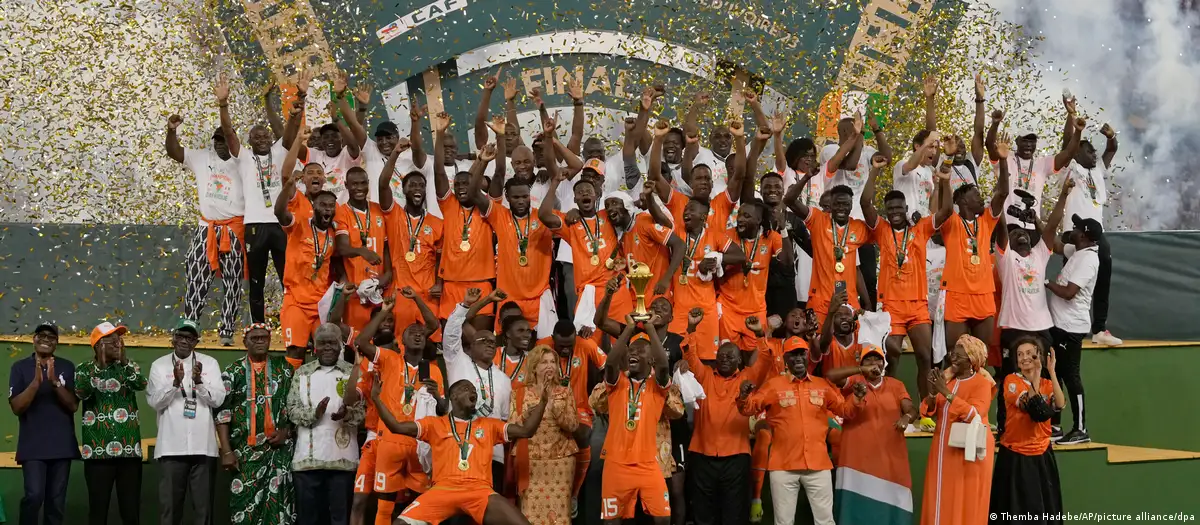
At big conferences or concerts, we know who we come to see: the star, the name on the poster, and the highlighted keynote/parrain. We know whose talk we'll dissect on the way home.
Most of us will never know those who built the stage that held it all together, made it possible for the stars to perform, and made sure the lights came on when they were supposed to; we rarely hear about them, see them, or talk about them.
That may make sense for a conference or concert, but not if we want to build a strong economy.
I've been thinking about this while trying to build something in Côte d'Ivoire. In my experience on the ground so far, success looks like this: the founder, the shiny CEO/DG, the owner, the person whose name becomes inseparable from what they created. And don't get me wrong, I understand the appeal. I'm a founder too. It feels good to own something, make decisions, and watch your idea come to life.
But in that picture, the people who keep the business running and make it all possible often get overlooked. We spend so much time celebrating the stars that we forget they couldn't perform without someone building the stage.
We have a stars problem.
I've never wanted to be a star.
Maybe this is personal, but I've never wanted to be a star. I'm an introvert who tries to blend in, even though my height and style make that hard. My personality doesn't always match the environment I work in. What matters to me is doing quality work and building something people can count on. I want people to listen and give me a chance to show that we can create self-sufficient systems for our institutions, and that technology can make life easier for everyday Africans. But this has been harder than I expected, because I'm not trying to be a star. Right now, it feels like there's only room for stars.
In the rooms I've tried to enter, people often decide if you're worth believing in before they even see your work. We look for stars, the loud, masked-as-confident person who can talk anyone into anything. If you don't act like that, you're easy to overlook.
I've had to adapt. I've learned to explain myself better and make my work more visible. I know people need a reason to trust me before they know me, and that's fair. No one can support work they never hear about. But I'm not going to focus on being a public personality. I don't want to be a star, and I won't change who I am just to fit in. The more people I meet across the continent, in Abidjan, Accra, Dakar, or Bamako, the more I see that many people like me get overlooked because they don't show ambition in a flashy way.
Everyone wants their own thing.
If being visible brings opportunities, people focus on being seen. If being a founder makes you stand out, joining someone else's project can feel like you disappear. So, everyone wants their own thing, and that seems like the safest way to matter. Then we wonder why so much talent works alone. In Francophone and Central Africa, I see many talented people stuck in this cycle, building great things by themselves. They do good work, but it's only a small step compared to what they could achieve together. Everyone knows each other, but few are willing to say, "il faut qu'on se mette ensemble," because it often means leaving your own project or joining something where you're not the main face, and that's not what a star does.
Personally, I'm interested in a different kind of ambition: building the stage. I want to build a team and a community where we support each other, because our success is connected and there's enough for everyone.
Let's build refrigerators.
The stage is the organization that helps people grow and go on to do great work elsewhere. It's the engineer who builds a tool others can rely on. It's the research, the production, and the institution that encourages the next person to do even more.
A founder can build a stage.
What matters most is how your success helps others succeed.
That's not a small thing. I believe building the stage can be the most rewarding place to be.
TSMC, which is probably one of the most important companies in the AI world, manufactures chips designed by other companies. It doesn't design, make, or sell a single chip under its own name, so it never competes with its customers. In 2025, it made products for 534 companies. Making other people's products possible is one of the biggest businesses on earth. The reward for building the stage isn't just a thank-you and a seat in the back; it's very profitable. Think about it: you make things possible for entire industries. What's a Coca-Cola without a refrigerator? Let's build refrigerators!!! I hope y'all are catching my drift.
We keep starting from scratch.
This idea matters far beyond technology. But with AI, working alone is just too costly to ignore.
Our ecosystems still lack enough deep technical expertise, and we can't ignore that. Teams keep repeating the same basic work. One team learns how to prepare language data, another finds a way to test a model, and another figures out how to make it work in an institution. But each lesson stays isolated, so the next team starts from scratch. We move forward, but we don't build collective strength.
A stage lets different kinds of expertise contribute and leaves something useful for the next person. I want us to create and support more of that. Companies can compete on products but still share the basics. Researchers can get credit for their work while still building shared resources. Small teams can stay independent but agree on how to measure results.
Coming together has to be worth it.
But saying "let's come together" is easy. I understand why people protect their work; they've seen their efforts get lost in someone else's story. If we want real collaboration, we have to make it trustworthy. Who owns what? Who gets paid? Whose name stays on the work? Who keeps it going after launch?
Here are a few early ideas:
Ownership. Contributors could share ownership of new projects or tools, with clear upfront agreements on what each person brings and how decisions are made.
Recognition. When someone contributes, their name stays connected to their work, in the code, documentation, and public story.
Compensation. People get paid for their contributions. If a project earns money, we agree upfront on how we'll share revenue and keep those arrangements transparent to everyone involved.
Continuity. We agree on who maintains the work and how responsibilities are handed over, so it continues after launch and nobody gets left behind.
These are early thoughts and definitely need feedback, but I'm sure we can get it right together.
This isn't easy to solve. It's hard, but it's worth the effort.
Calling someone a stage should never be a way to ask them to do all the work for free.
I hope you know I don't mean that.
What happens when the spotlight moves on?
People aiming to be stars might miss something else. The same ecosystem that lifts you can just as quickly bring you down. When you no longer fit what's needed, the invitations stop, the money moves on, and the people who praised you rewrite your story. We've all seen it happen.
A star is just one person, one name, one moment. A stage is a platform. It supports the star who succeeds, fails, or moves on, and then the next person. A stage stays important because it gives others a place to shine. It adapts to whoever stands on it.
Building a stage never ends. You keep it up, improve it, and make space for new ideas. People keep coming back because it helps them do things they couldn't do alone. That's value that grows over time. Someone learns, builds, and helps someone else, and the work continues even after the spotlight moves away.
The ambition I'm bringing to Souba
That is the ambition I'm bringing to Souba.
I want us to do work that earns trust because it lasts. Let's build things people can use and leave behind knowledge that helps others go further. I want this to be a real business, where people are paid and recognized for what they make possible. I'm looking for people to build with, and I'm open to changing the name from Souba if we decide that is better. As a founder, I have to hold myself to this too. It's easy to talk about shared foundations and then make everything depend on me.
For now, I'll keep learning how to talk about the work and make it visible.
But I want the work to matter beyond the attention I can bring.
My goal is to build a community that everyone can benefit from, not just for a moment, but for years to come. To keep this sustainable, I want my platform to create shared resources and open documentation. I hope more of us build enough stages and connect them so our foundation is strong enough that no one can take us down.
I'm going to keep building the stage.
If you share this ambition, let's connect and start building something that lasts, something bigger than any one star.